

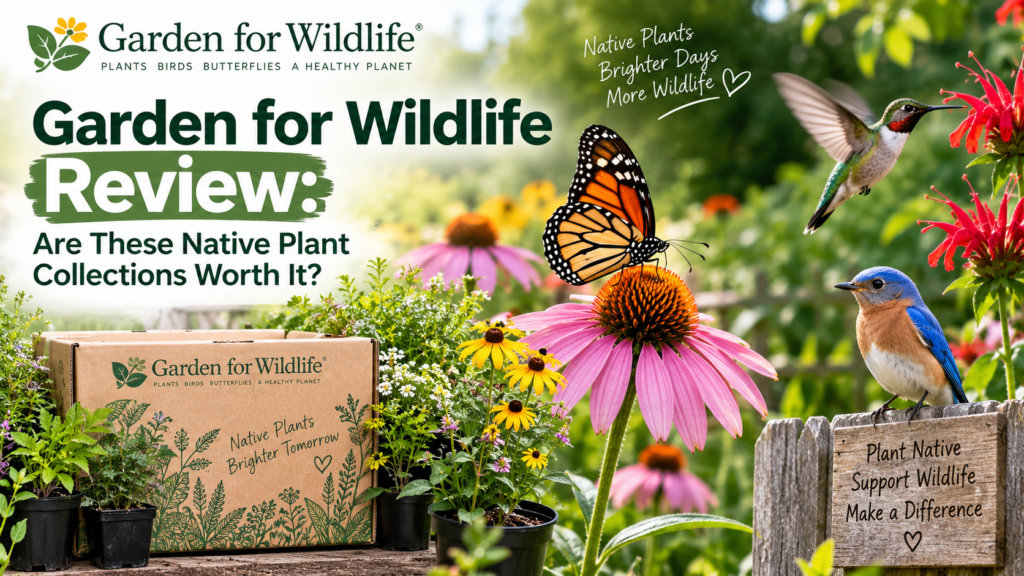
Garden for Wildlife Review: Are These Native Plant Collections Worth It?
Disclosure: This post may contain affiliate links. If you make a purchase through one of these links, I may earn a commission at no additional […]
Garden for Wildlife Review: Is This Native Plant Store Worth It?
Transforming your lawn or suburban garden into a wildlife sanctuary sounds rewarding, but choosing the right native species for your specific region can quickly become overwhelming. Garden for Wildlife aims to solve this guesswork with expert-curated plant starter kits tailored to local eco-regions.
Explore Garden for Wildlife Starter KitsIntroduction: The Native Plant Challenge
In recent years, home gardeners have shifted away from traditional water-thirsty lawns and ornamental exotic plants in favor of sustainable, ecological landscaping. Native plants offer massive ecological benefits: they require significantly less maintenance once established, use roughly half as much water as non-native species, and provide essential habitats for declining populations of monarchs, songbirds, and native bees.
However, many gardeners run into a major roadblock when getting started: navigating plant hardiness zones, ecoregion native ranges, light requirements, and soil conditions. It is easy to accidentally purchase cultivated hybrids or species non-native to your specific state that fail to support local wildlife.
That is where Garden for Wildlife enters the scene. Operating in association with wildlife conservation efforts, this online retailer specializes in region-specific native plant collections designed to remove the complexity from eco-friendly gardening. In this detailed review, we will examine what Garden for Wildlife offers, analyze its starter kits, look at transparent pros and cons, and determine whether these curated plant sets deliver true value for your home landscape.
What is Garden for Wildlife?
Garden for Wildlife is a purpose-driven online plant retailer and conservation platform that supplies chemical-free native plants directly to homeowners across the United States. Originating as an initiative backed by the National Wildlife Federation (NWF), the organization operates with a clear environmental mission: restoring lost habitats by making native plant selection effortless and accessible.
Unlike standard big-box garden centers that sell generalized plants treated with systemic pesticides (like neonicotinoids, which harm pollinators), Garden for Wildlife partners with a national network of regional growers. These growers cultivate chemical-free plants native to distinct geographical areas, ensuring buyers receive species suited to survive and thrive in their local soil and climate.
Target Audience & Purpose
Garden for Wildlife is specifically tailored for:
- Beginner Ecological Gardeners: Homeowners who want to support local pollinators but do not know which plants are native to their specific zip code.
- Busy Homeowners: People who want a pre-designed, visually appealing bloom sequence across spring, summer, and fall without spending hours researching plant pairings.
- Wildlife Enthusiasts: Gardeners eager to attract specific creatures, such as monarch butterflies, ruby-throated hummingbirds, songbirds, or fireflies.
- Yard Restorers: Individuals replacing sections of turf grass or refreshing old garden beds with sustainable perennial species.
Key Features & Product Offerings
Garden for Wildlife offers several distinct categories of native flora, ranging from targeted starter collections to individual plant sets, shrubs, and keystone trees. Here is a breakdown of how their core features translate into practical benefits for your garden.
Ecoregion-Matching Technology
By entering your zip code on their site, the platform automatically filters plants native to your region (Northeast, Southeast, Midwest, West, or Southwest). This guarantees you only order species that naturally belong in your ecosystem.
100% Pesticide-Free Guarantee
All plants are grown without systemic insecticides or harmful chemicals, ensuring that caterpillars, bees, and butterflies can safely feed on nectar, pollen, and host leaves from day one.
Curated Starter Collections
Pre-designed plant kits usually feature 3 to 4 complementary native species selected to ensure multi-season blooms, contrasting foliage heights, and balanced wildlife benefits.
Perennial Root Resilience
Plants are shipped as healthy, well-rooted plugs or pots. Native plants naturally feature deep root systems adapted to reach water lower underground, increasing long-term drought tolerance.
Popular Curated Plant Collections
Rather than making buyers select individual plugs, Garden for Wildlife organizes its flagship offerings around clear wildlife outcomes and habitat conditions. Some of their best-known curated kits include:
- Monarch Munchables / Milkweed for Monarchs: Curated specifically to include native milkweed species (the sole host plant for monarch caterpillars) alongside nectar-rich companion perennials like Black-Eyed Susans or Coneflowers.
- Hummingbird Heroes / Hummingbird Haven: Features deep-tubed, brightly colored native blooms like Bee Balm (Monarda) and Cardinal Flower that naturally attract hummingbirds.
- Spring Bee Buffet / Blissful Bees: Packed with early-season bloomers that provide vital pollen and nectar when native solitary bees emerge from hibernation.
- Shady Sanctuaries: Specifically selected native species adapted to low-light woodland conditions, solving the common challenge of planting in tree shade.
- Firefly Delight: Native groundcovers and moisture-retaining perennials that create ideal micro-climates for firefly larvae.
What Makes Garden for Wildlife Stand Out?
When comparing Garden for Wildlife to local nurseries or standard online plant retailers, three primary differentiators emerge:
1. Non-Profit Mission & Environmental Impact
A portion of every purchase directly supports non-profit wildlife conservation efforts aimed at reversing habitat loss and protecting endangered pollinators. Furthermore, yards planted with these native species can qualify for official certification as a Certified Wildlife Habitat®, creating measurable conservation corridors in suburban neighborhoods.
2. Focus on “Keystone” Species
Garden for Wildlife emphasizes native keystone plants—species that support an disproportionately high number of local insect larvae. For instance, planting native oak trees, goldenrods, or sunflowers supports hundreds of caterpillar species, which in turn feed nesting songbirds. Their kits prioritize these ecological powerhouses over purely ornamental exotic cultivars.
3. Eco-Conscious Packaging & Shipping
Shipping live plants requires care. Garden for Wildlife uses specially constructed, recyclable cardboard packaging designed to lock root balls securely in place without destroying stems or crushing foliage during transit.
Pros and Cons / Things to Consider
To keep this review balanced and helpful, let us look at both the proven advantages and the realistic considerations you should keep in mind before placing an order.
PROS
- Takes all guesswork out of finding zip-code-accurate native species.
- Strictly chemical-free and safe for caterpillars and pollinators.
- Plants arrive with healthy, established root structures ready to plant.
- Multi-season bloom planning is already done for you.
- Supports real-world wildlife conservation initiatives.
- Free domestic shipping on qualifying plant orders over $99.
Things to Consider
- Higher upfront cost compared to buying unbranded seeds or bulk bare-root plugs.
- Popular starter kits frequently sell out during peak spring planting windows.
- Planting is seasonal; orders may be placed as pre-orders depending on winter/summer weather windows.
- Young native starter plants require regular watering during their first establishing season.
Who is Garden for Wildlife Best For?
The Ideal Buyer
Garden for Wildlife is exceptionally well-suited for suburban or urban homeowners who want an attractive, eco-friendly garden without needing a degree in botany. If you want to replace a section of lawn, attract butterflies, or give a meaningful environmental gift to a friend, these pre-curated kits offer a convenient, highly reliable pathway.
Who Might Look Elsewhere?
If you are a highly experienced native plant landscaper looking to buy hundreds of low-cost bare-root plugs in bulk, or if you prefer hunting down rare local plant genotypes at community native plant sales, ordering pre-packaged consumer starter kits might feel more limited. Additionally, gardeners on a tight budget who are comfortable growing perennials from seed over two to three years may prefer starting from scratch.
Price & Value Analysis
Pricing across Garden for Wildlife’s catalog is structured around plant volume and collection complexity. Here is a breakdown of typical pricing tiers across their official catalog:
Official Pricing Structure
- Single Species Plant Sets (e.g., Bee Balm, Swamp Milkweed): Starting from $38.00 per multi-plant set.
- Curated Native Starter Kits (e.g., Monarch Munchables, Hummingbird Heroes): Typically priced around $98.00 (frequently on seasonal sale starting around $83.30).
- Native Shrubs & Trees (e.g., Highbush Blueberry, Pin Oak): Ranging between $60.00 and $69.00.
- Large Landscape Collections (e.g., Nested Habitat): Ranging from $211.65 to $249.00.
Note: Free standard domestic shipping is offered on qualifying orders of $99 or more. Prices are verified from the official store and subject to active seasonal promotions.
Evaluating Overall Value
At first glance, spending $80 to $100 on a plant starter kit might seem higher than picking up annuals at a local big-box discount store. However, the value proposition lies in long-term longevity and ecological safety:
- Perennial Return: Unlike annual flowers that die at first frost and must be repurchased every spring, native perennials return year after year, expanding in size and value over time.
- Reduced Water & Fertilizer Costs: Native plants adapted to local soil conditions require zero synthetic fertilizers and drastically reduced watering once their root systems establish.
- Guaranteed Pesticide-Free Growing: Big-box nursery plants are frequently pre-treated with systemic pesticides that can poison the very caterpillars you are trying to attract. Garden for Wildlife guarantees pollinator safety.
Is Garden for Wildlife Worth Buying?
If your goal is to build an impactful, pollinator-friendly garden without making costly planting mistakes, Garden for Wildlife is unequivocally worth considering.
The primary barrier to successful native gardening has always been the steep learning curve: matching light levels, soil drainage, native ranges, and host relationships. By automating this process through zip-code matching and delivering healthy, pesticide-free root systems directly to your front door, Garden for Wildlife removes the friction from eco-friendly gardening.
While you do pay a small premium for the curation, expert pairing, and protective mail-order packaging, the time saved and high plant survival rates make it a solid investment for modern homeowners.
Final Verdict
Garden for Wildlife delivers a convenient, ecologically sound, and trustworthy solution for anyone wanting to support pollinators, birds, and beneficial insects. With healthy root systems, guaranteed pesticide-free growing, and intelligent regional curation, their native plant kits make ecological landscaping accessible to gardeners of all experience levels.
Recommendation: Highly recommended for beginner to intermediate gardeners, wildlife enthusiasts, and homeowners looking to replace lawns with vibrant perennial habitat.
Visit Official Website & Find Native Plants
Why Is Blacklyte Athena Pro Trending in 2026? Gaming Chair Review
September 14, 2026
MARSTEK Review: Are MARSTEK Energy Storage Solutions Worth Buying in 2026?
September 12, 2026
Why Is Retique It Trending in 2026? Liquid Wood DIY Analysis
September 12, 2026